For James, the focus on women and girls is really a focus on families. She speaks about women as creators and keepers of the village. Her commitment to this principle comes from a love of herself and other women. Ever present in her stories about the women in her family are references to her mother, Andrea James, and her daughter Katori. In the stories that center women, men are also present. Most notably, she mentions the presence of a caring father who provided great care during her mother’s incarceration.
There are also references to “community mothers” or “community aunties,” including Stacey Borden, founder of New Beginnings Re-entry Services. She recalls how supportive Borden was when she (quite nervously) began speaking publicly. Borden was a supportive presence, cheering her James on from the audience. When James speaks of women, it is always in community with others. These are community women who improve the lives of others.
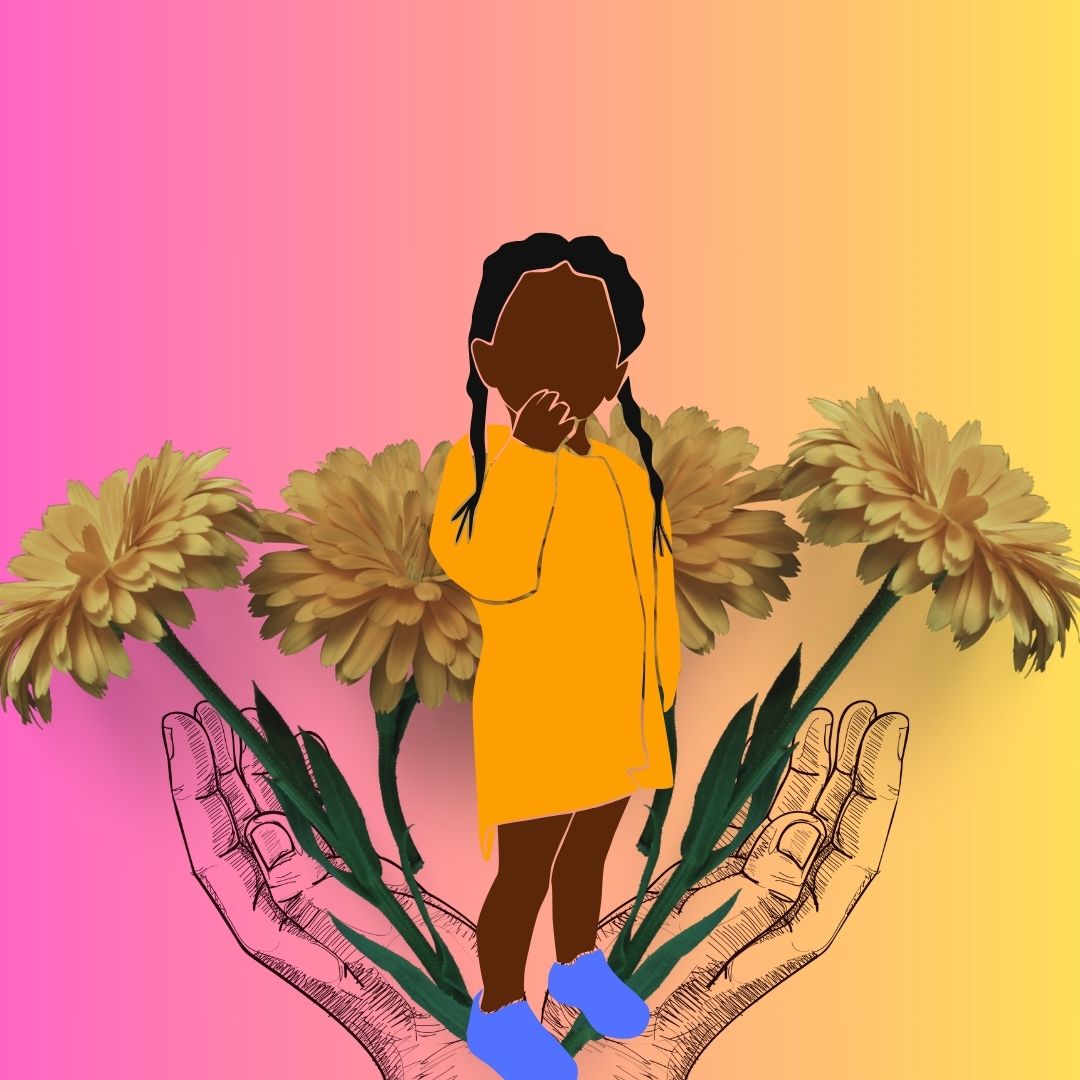
[I was] watching my mom endlessly build up Black women–no matter white women, any woman, no matter how much they may–I call them like scars–no matter how much they lash back, or how much they resist the greatness. She still pours into them, no matter what. And I think that is what shifted me to really seeing how important it is for Black women to love Black women unapologetically. Even in our community, we’ll sit here and let a man walk all over us. Leave us. Come back, leave us again. Do all these things: take our money; just do all this crazy stuff. And then we forgive them. But as soon as [it’s] a woman that is our sister we’ll be like, “Oh, I can’t do this for you.” It’s like, “I’m never talking to her again.” It shows that we don’t have forgiveness amongst each other.
— Sashi James
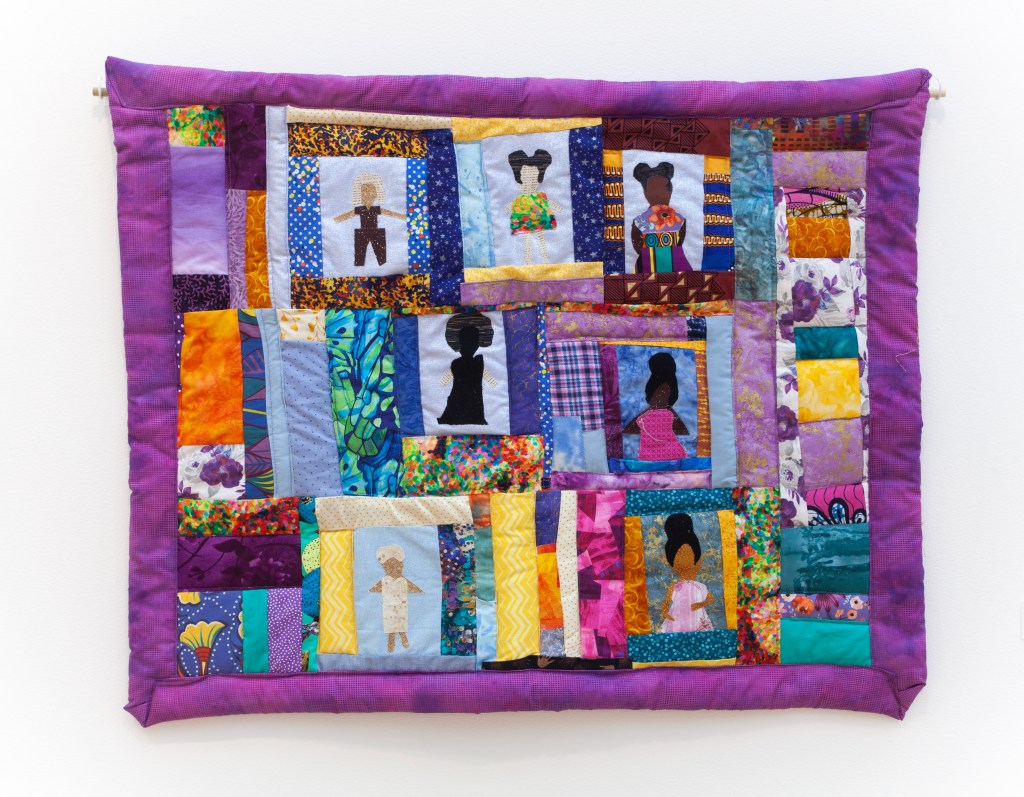
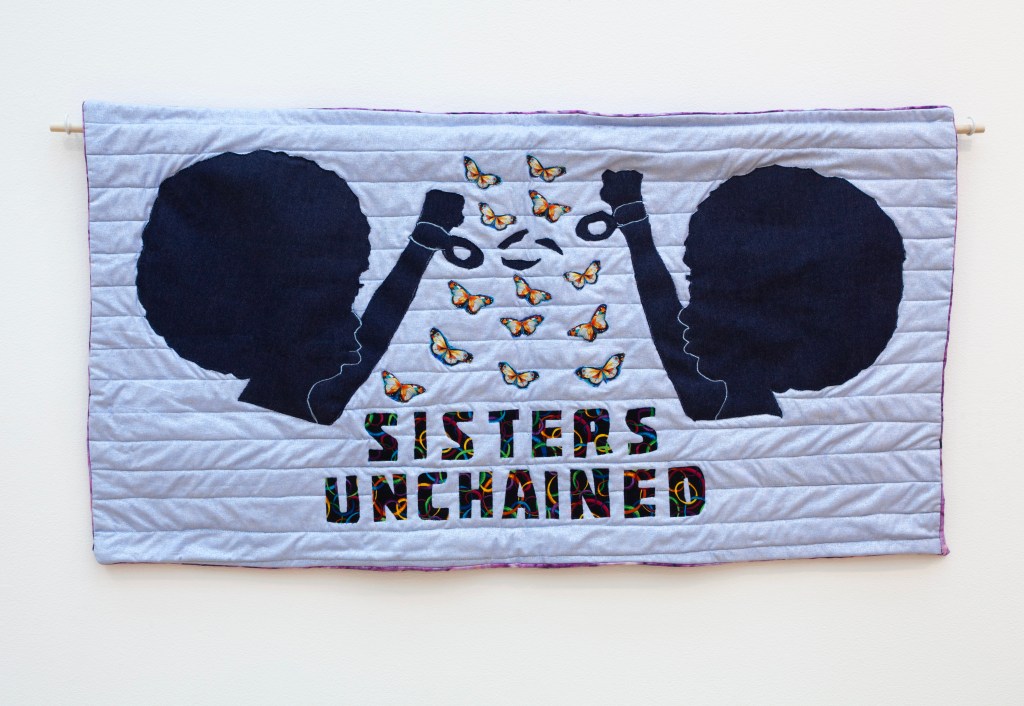
These quilts were made by Kimberly Love Radcliffe during a summer program with Sisters Unchained, an organization centering the daughters of (formerly) incarcerated persons. One of the quilts are silhouettes that represent those individuals who have helped the young women heal; the other quilt is the logo of the organization, created as a gift by the artist.
READINGS
- What is Abolition Feminism, What is Carceral Feminism, & What Could a World Without Prisons Look Like?
- Dismantling Prisons: Abolition Feminism, Women, Incarceration and #MeToo
ACTIVITY
Consider the “community women” you know. Pick one who has had an impact on your life. Describe how that woman’s part of the world would be transformed if she had the resources required to create her vision of the world. Make a drawing that represents her vision and give the drawing a heading that honors that woman.
 Massachusetts Prison Abolition